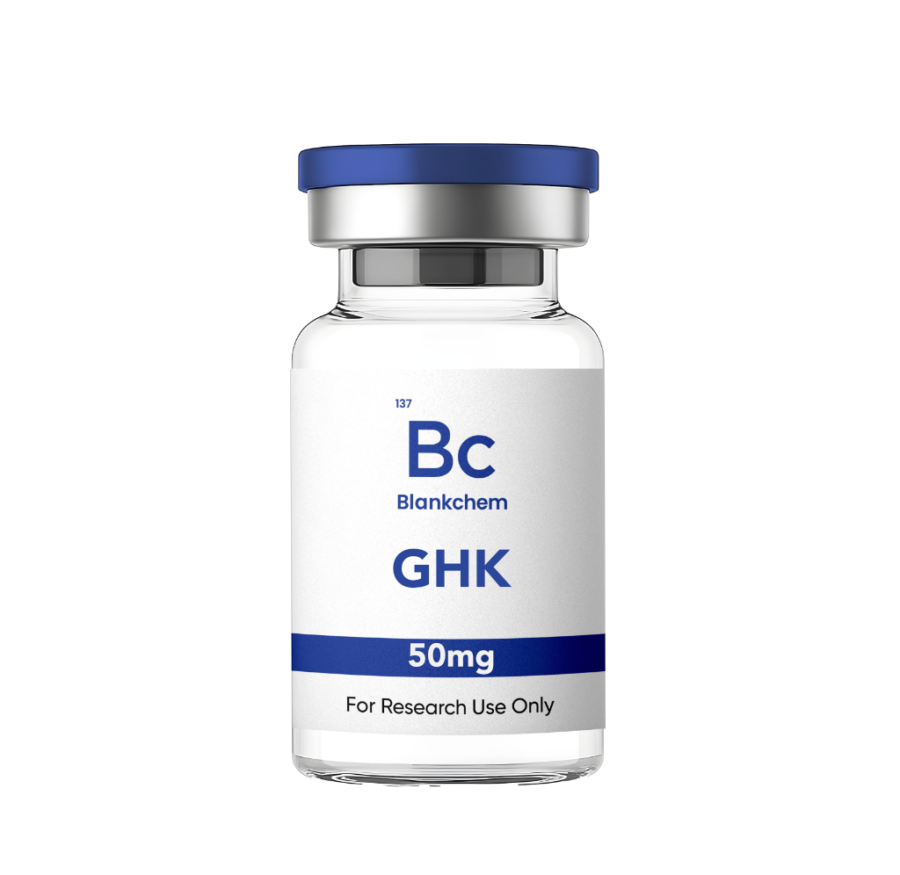
GHK
Endogenous tripeptide for extracellular matrix and gene expression research.
This lyophilized peptide must be reconstituted with RECON-S before use in research. Most customers forget to add it — don't get stuck waiting for a second order.
Add Reconstitution SolutionGHK (Glycyl-L-Histidyl-L-Lysine) is an endogenous tripeptide first isolated from human plasma in 1973. It is composed of three amino acids — glycine, L-histidine, and L-lysine — and is naturally present across multiple biological compartments including plasma, saliva, and urine. GHK is notable for its strong copper(II) binding affinity, though it demonstrates independent biological activity as a free tripeptide and is a subject of ongoing research in its uncomplexed form.
GHK declines significantly with age, a pattern that has been associated in research literature with reduced regenerative capacity in aging tissue models — making it a relevant compound for studies investigating tissue maintenance signaling and age-related cellular pathway changes.
GHK is a naturally occurring tripeptide found in human plasma, saliva, and urine. It has been studied for over five decades for its involvement in extracellular matrix regulation, collagen signaling, gene expression modulation, and cytoprotective activity. Its concentration declines with age, which has made it a subject of interest in research models examining tissue maintenance and age-related regenerative pathway changes.
No. GHK is the free tripeptide in its uncomplexed form. GHK-Cu refers to the copper-bound complex of the same peptide. While GHK has a strong natural affinity for copper(II) ions, research has been conducted on GHK independently to study its baseline activity and copper-free signaling properties. BlankChem’s GHK is supplied without copper complexation.
GHK has been studied for activity across several pathways — including extracellular matrix remodeling via MMP and TIMP modulation, HDAC inhibitor-like gene regulation, and metal ion chelation relevant to copper and zinc toxicity models. In vitro research has also documented its interaction with fibroblast activity and inflammatory cytokine cascades.
Recent in vitro research from Karolinska Institutet demonstrated that GHK in its free form can prevent copper- and zinc-induced protein aggregation and CNS cell death, and attenuate copper toxicity during simulated inflammatory conditions. These findings position GHK as a relevant compound for researchers investigating metal dysregulation in neurodegenerative disease models.
Lyophilized GHK should be stored at -20°C, away from light and moisture. GHK has documented stability limitations in free form due to peptidase activity, so researchers should account for this when designing reconstitution and experimental protocols.