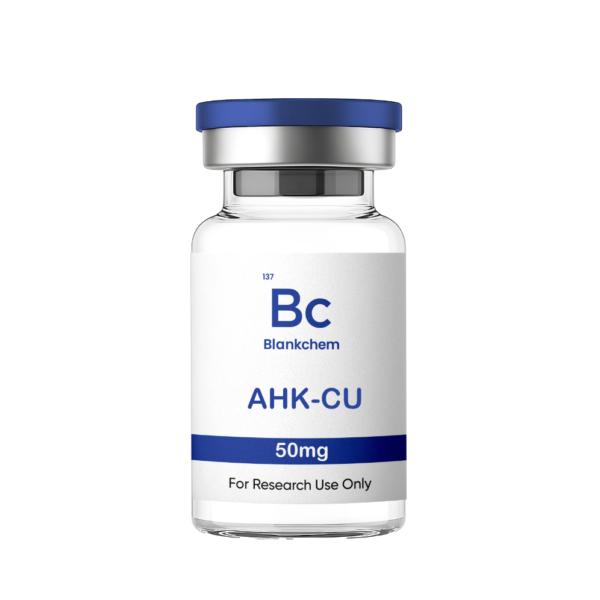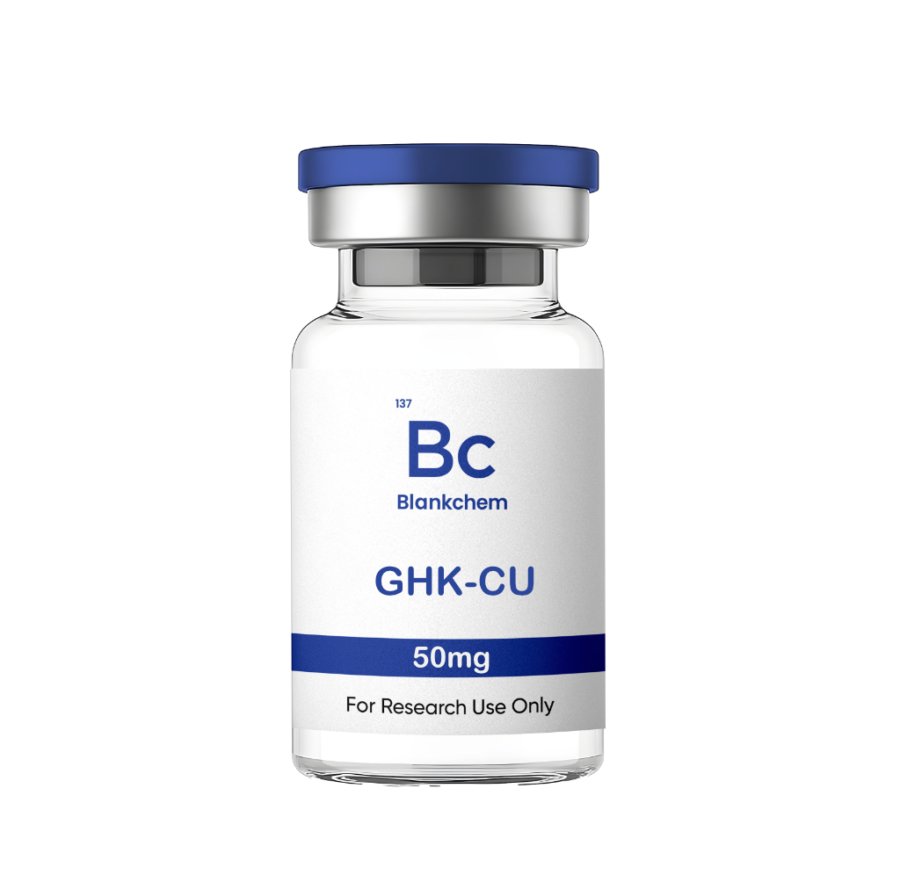
GHK-CU
Copper-binding tripeptide complex
This lyophilized peptide must be reconstituted with RECON-S before use in research. Most customers forget to add it — don't get stuck waiting for a second order.
Add Reconstitution SolutionGHK-Cu (Copper Peptide Complex) — 50mg | 100mg
GHK-Cu is one of the most extensively researched peptide compounds in modern biochemistry — a naturally occurring tripeptide complex consisting of Glycyl-L-histidyl-L-lysine bound to a copper(II) ion, found endogenously in human plasma, saliva, and urine. What makes GHK-Cu remarkable from a research standpoint is the sheer breadth of its documented biological activity. Over five decades of published research have examined its role in wound healing biology, extracellular matrix remodeling, angiogenesis, antioxidant pathway activation, and gene expression modulation — with published genomic studies documenting its influence on over 4,000 human genes. It is among the most studied naturally occurring peptide complexes in existence, and its copper(II) ion component is not incidental — copper is an essential cofactor in collagen synthesis, antioxidant enzyme activity, and numerous critical enzymatic pathways, and its chelation to the GHK tripeptide dramatically enhances its biological availability and receptor interaction profile in research models.
The characteristic blue appearance of GHK-Cu lyophilized powder is a direct result of the copper(II) ion complex — this is not a quality indicator but a defining physical characteristic of the compound itself.
Molecular Formula: C₁₄H₂₄CuN₆O₄ | Molecular Weight: ≈403.9 Da | Purity: ≥99% HPLC Verified
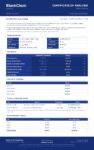
Each vial contains pharmaceutical-grade mannitol as a lyoprotectant. Every lot is analyzed by HPLC with mass spectrometry data included. Full COA available via our batch lookup tool.
For laboratory research purposes only. Not for human consumption. Research use only.
Once prepared for laboratory use, refrigerated storage is standard protocol. Research and stability studies indicate that prepared peptide solutions of this class typically maintain peak integrity for approximately 28 to 40 days under refrigerated conditions. Beyond this window researchers should account for potential degradation when designing experimental protocols.
For laboratory research purposes only. Not for human consumption. Research use only.
Lyophilized (unprepared) vials: Refrigerated storage between 35.6–46.4°F (2–8°C) is recommended for GHK-Cu to maintain compound integrity. Unlike most lyophilized peptides that tolerate room temperature short-term storage, GHK-Cu’s copper complex makes refrigeration the preferred condition even for short-term storage. For long-term preservation, stable refrigerated storage without repeated temperature cycling maintains compound integrity for the duration of standard research timelines. Avoid repeated temperature cycling as it accelerates degradation.
GHK-Cu arrives as a blue lyophilized powder in a sterile sealed vial — the blue color is a defining physical characteristic of the copper(II) ion complex and confirms compound identity. Pharmaceutical-grade mannitol is included as a lyoprotectant. This is expected and normal.
Every batch undergoes independent HPLC analysis with mass spectrometry data included prior to shipping. Purity is verified at ≥99%. Full COA data is available via our batch lookup tool using your batch number.
GHK-Cu has been extensively studied for its antioxidant properties, with research documenting its capacity to activate superoxide dismutase — a copper-dependent enzyme that neutralizes superoxide radicals — and its upregulation of other antioxidant defense genes through Nrf2 pathway activation. Studies have also examined its ability to chelate free copper and iron ions, preventing their participation in Fenton reactions that generate damaging hydroxyl radicals. This combination of direct and indirect antioxidant activity has made GHK-Cu a reference compound in oxidative stress research literature.
Emerging research has examined GHK-Cu in neurological contexts, with studies investigating its effects on nerve growth factor (NGF) synthesis, its neuroprotective properties in oxidative stress models, and its influence on gene expression in neural tissue. Published research has documented GHK-Cu’s capacity to upregulate genes associated with neuronal survival and synaptic function, positioning it as a compound of growing interest in neurobiological research examining the intersection of copper metabolism, oxidative stress, and neuronal health.
Angiogenesis research on GHK-Cu has documented its capacity to promote new blood vessel formation in laboratory models, with studies examining its interaction with VEGF signaling pathways and its effects on endothelial cell migration and proliferation. This pro-angiogenic activity is considered a key component of its documented role in wound healing biology, as adequate vascular supply is a prerequisite for effective tissue repair in research models. GHK-Cu’s angiogenic properties have also attracted research interest in the context of ischemic tissue models where vascular remodeling is a primary research objective.
Among the most significant findings in GHK-Cu research is its documented influence on gene expression at scale. Published genomic studies using gene expression analysis have documented GHK-Cu’s ability to modulate the expression of over 4,000 human genes — including genes involved in collagen synthesis, antioxidant defense, anti-inflammatory pathways, DNA repair mechanisms, and neurological function. Research has identified GHK-Cu as a potent activator of the Nrf2 pathway — a master regulator of antioxidant and cytoprotective gene expression — making it a compound of significant interest in oxidative stress and cellular protection research models.
The extracellular matrix (ECM) is the structural scaffold that surrounds and supports cells in all tissues. ECM remodeling — the dynamic process of breaking down and rebuilding this scaffold — is fundamental to tissue repair, wound healing, and cellular homeostasis. Published research on GHK-Cu has extensively documented its role in ECM remodeling, specifically its ability to stimulate the synthesis of collagen, elastin, and glycosaminoglycans while simultaneously activating matrix metalloproteinases (MMPs) responsible for clearing damaged ECM components. This dual action — promoting new matrix synthesis while clearing damaged matrix — has made GHK-Cu one of the most studied compounds in wound healing and dermatological research literature.
The characteristic blue color of GHK-Cu lyophilized powder is a direct physical consequence of the copper(II) ion complex. Copper(II) ions absorb light in the orange-red spectrum, producing the blue-green appearance observed in copper-containing compounds. This is a defining physical characteristic of the compound — not a contamination indicator or quality concern. Authentic, high-purity GHK-Cu will always present as a blue to blue-green lyophilized solid. A white or colorless powder would indicate absence of the copper complex and should be treated as a quality concern.
GHK-Cu has a molecular formula of C₁₄H₂₄CuN₆O₄ and a molecular weight of approximately 403.9 Daltons. The compound consists of a three amino acid sequence — glycine, histidine, and lysine — with a copper(II) ion chelated through the histidine imidazole ring and the glycine amino terminus. The copper component is not merely incidental to the compound’s structure — copper is an essential cofactor in collagen and elastin crosslinking, superoxide dismutase activity, and numerous critical enzymatic processes. Its chelation to the GHK tripeptide creates a stable complex that research has shown dramatically enhances copper bioavailability and tissue uptake compared to free copper ions, while simultaneously activating biological pathways that neither the peptide nor the copper ion activates independently.
GHK-Cu is a naturally occurring tripeptide-copper complex consisting of the amino acid sequence Glycyl-L-histidyl-L-lysine (GHK) chelated to a copper(II) ion. It was first isolated from human plasma in 1973 by researcher Loren Pickart, whose foundational work established GHK-Cu as a biologically active compound with a remarkably broad range of documented activity in laboratory research. It is found naturally in human plasma at concentrations that decline significantly with age — a pattern that has driven substantial research interest in its role in cellular maintenance and tissue homeostasis. GHK-Cu is one of the most studied naturally occurring peptide complexes in biochemistry, with over five decades of published research spanning wound healing, dermatology, oncology, neurology, and genomics.