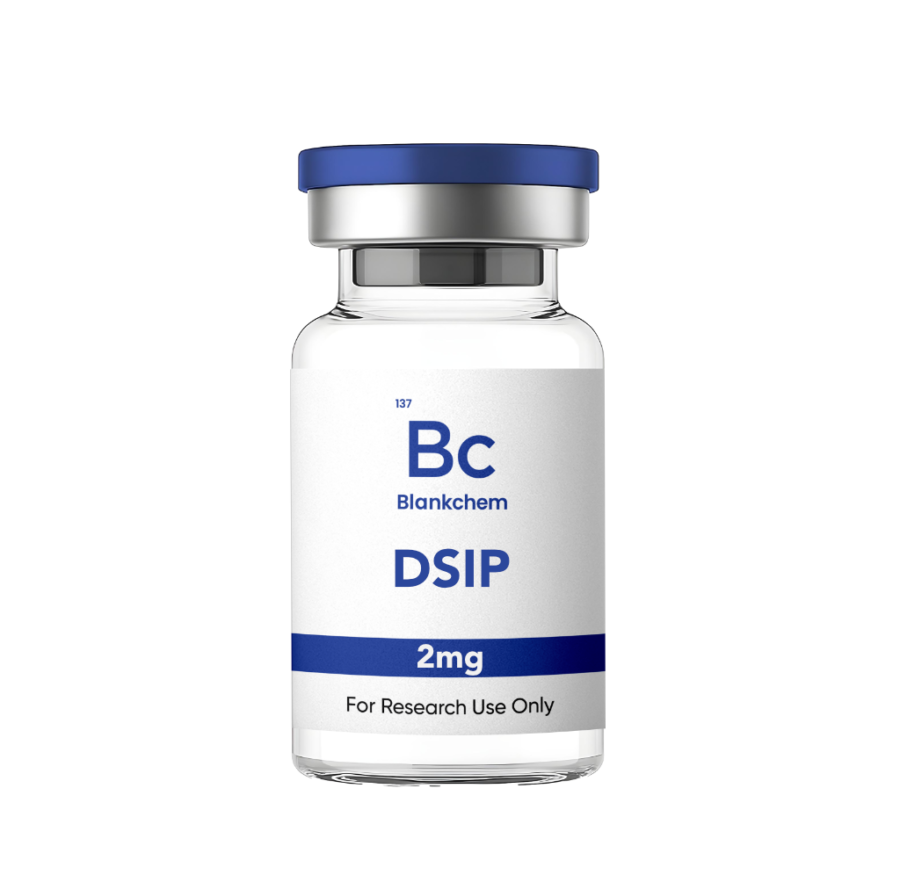
DSIP
Endogenous nonapeptide for neuromodulatory and endocrine signaling research.
This lyophilized peptide must be reconstituted with RECON-S before use in research. Most customers forget to add it — don't get stuck waiting for a second order.
Add Reconstitution SolutionDelta Sleep-Inducing Peptide (DSIP) is an endogenous nonapeptide first identified in 1977 during thalamic stimulation research in rabbits. It has since been detected in human brain tissue and plasma, with notable blood-brain barrier permeability — an atypical characteristic among peptide compounds that makes it a subject of significant interest in neuropeptide research.
DSIP is an endogenous nonapeptide first isolated from rabbit cerebral venous blood during thalamic stimulation experiments. It is studied in laboratory settings for its interactions with neuromodulatory pathways, endocrine signaling, and stress response cascades. Its ability to cross the blood-brain barrier — uncommon for peptides — makes it a particularly relevant compound for neuropeptide transport and CNS pathway research
Research has identified potential interactions at NMDA receptor sites, as well as involvement in glucocorticoid-regulated pathways and alpha-1 receptor acetyltransferase activity. Its downstream effects on substance P, β-endorphin, and corticosterone levels in hypothalamic tissue have also been documented in rodent models, suggesting DSIP may act as a molecular trigger for broader neuroendocrine cascades.
In vitro, DSIP has a short half-life of approximately 15 minutes due to the action of a specific aminopeptidase-like enzyme. Researchers should account for this degradation rate when designing experimental protocols and handling reconstituted solution. Lyophilized storage at -20°C is standard for preserving integrity prior to use.
DSIP exhibits an unusual degree of gut absorption and blood-brain barrier permeability for a peptide of its size. Most peptides are poorly absorbed and struggle to cross the CNS barrier — DSIP’s ability to do both makes it a useful compound for studying peptide transport mechanisms and central neuromodulatory effects in controlled research settings.
Yes. DSIP has been identified in human brain tissue, plasma, and at elevated concentrations in breast milk. Its endogenous presence across multiple biological compartments is one reason it continues to attract research interest despite a relatively limited recent publication record compared to its earlier study history in the 1970s through 1990s.