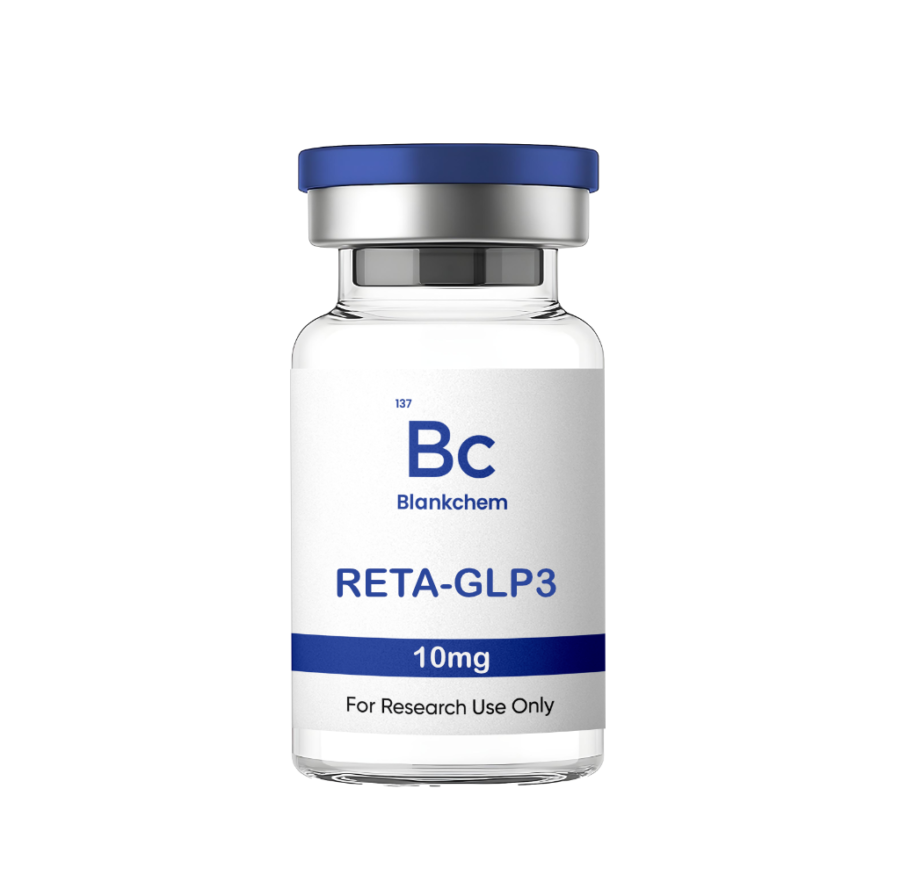
GLP3-RETA
Synthetic 39–amino acid peptide analogue
This lyophilized peptide must be reconstituted with RECON-S before use in research. Most customers forget to add it — don't get stuck waiting for a second order.
Add Reconstitution SolutionRTA (Triple-Receptor Agonist)
RTA is a synthetic triple receptor agonist — the first of its class to simultaneously engage three distinct receptor pathways within a single compound. Where first-generation single-receptor analogues act on one pathway and dual agonists target two, RTA represents the next frontier in metabolic receptor research — engaging all three incretin and glucagon-related pathways simultaneously. This mechanistic complexity has made it one of the most heavily researched peptides in modern metabolic science, with an expanding body of preclinical and clinical literature examining its effects on energy homeostasis, adipose tissue, cardiovascular markers, and glucose regulation.
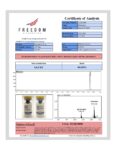
Each vial contains 10mg of lyophilized RTA with pharmaceutical-grade mannitol as a lyoprotectant. Independently tested for purity and identity. Full COA available via our batch lookup tool.
Specifications Molecular Formula: C₂₆₇H₄₀₄N₆₄O₈₁ Molecular Weight: ~5,133 g/mol Form: Lyophilized peptide powder Available Sizes: 10mg Purity: ≥99% (HPLC verified) Appearance: White to off-white lyophilized solid Solubility: Water or aqueous buffers Storage: Store at -4°F for long-term stability; avoid repeated freeze-thaw cycles. Suitable for up to 12 weeks after reconstitution if stored under refrigeration.
RTA — Research Profile
RTA is a synthetic peptide engineered as a triple receptor agonist, designed to simultaneously activate three distinct receptor pathways. Each of these receptors plays a well-documented role in metabolic regulation, energy homeostasis, and glucose dynamics. By engaging all three pathways within a single compound, RTA has become a uniquely valuable research tool for studying the combined and potentially synergistic effects of incretin and glucagon receptor co-activation on metabolic outcomes in laboratory settings.
RTA — Mechanistic Differentiation
SC-101 is a single receptor agonist acting on one pathway. A dual agonist adds a second receptor activation. RTA goes a step further by incorporating a third receptor pathway — glucagon receptor agonism — making it a triple agonist and mechanistically distinct from both.
The third pathway is particularly significant from a research standpoint. Glucagon receptor activation has been studied for its role in promoting hepatic fat oxidation and increasing energy expenditure — effects that are distinct from and complementary to the other two receptor-mediated mechanisms. This three-pathway engagement is what makes RTA a mechanistically unique compound in the current research landscape.
RTA — Preclinical Research Summary
Preclinical studies in rodent and non-human primate models have examined RTA’s effects across a wide range of metabolic markers. Animal model research has documented:
- Significant reductions in body weight and visceral adipose tissue
- Improvements in fasting glucose and insulin sensitivity
- Reductions in hepatic fat content
- Favorable changes in lipid profiles including triglycerides and LDL cholesterol
Researchers have noted that the magnitude of effects observed in animal models exceeded those documented with single and dual receptor agonists. This has driven substantial interest in RTA’s triple receptor mechanism as a research model for studying compounded receptor pathway engagement.
RTA engages three receptor pathways, each with a distinct and well-documented role in metabolic research:
Pathway 1 — Incretin signaling Studied extensively for its role in glucose-dependent insulin secretion, gastric motility, and appetite signaling in animal models. The most researched of the three pathways, with the largest existing literature base.
Pathway 2 — Insulinotropic signaling Studied for its role in potentiating insulin response and its effects on adipose tissue metabolism. Research suggests additive effects when combined with Pathway 1 activation.
Pathway 3 — Hepatic energy regulation The differentiating pathway. Studied for its role in hepatic fat oxidation, energy expenditure, and glycogen metabolism. This pathway is absent in single and dual receptor compounds, making it the primary mechanistic distinction that researchers cite when selecting RTA as a research standard.
The combination of all three within a single compound is what makes RTA a useful model for studying receptor co-activation and potential synergistic metabolic effects in controlled laboratory settings.
RTA — Pathway 3 Research Context
Historically, the third receptor pathway has been studied primarily in the context of raising blood glucose — the opposite of insulin. However, emerging research has reframed this receptor activation in a more nuanced light.
In the context of triple agonism, Pathway 3 activation has been studied for its ability to increase hepatic fat oxidation, promote thermogenesis, and drive energy expenditure independent of food intake reduction. This energy expenditure component is mechanistically distinct from Pathway 1 and Pathway 2 mediated effects, and represents one of the key reasons RTA has attracted significant research interest as a model for studying compounded metabolic receptor engagement.
RTA — Cardiovascular Research Context
Emerging research has begun examining RTA’s effects on cardiovascular markers in both animal and early human research models. Studies have investigated its effects on blood pressure, heart rate, arterial inflammation markers, and lipid profiles.
Single-receptor agonists in this compound class have an established body of cardiovascular research literature. RTA’s triple receptor profile has prompted researchers to investigate whether its additional pathway engagement produces compounding or attenuating effects on cardiovascular parameters compared to single and dual receptor compounds — a question that remains an active area of preclinical and early clinical investigation.
RTA is soluble in RECON-S , which is the most commonly cited solvent in published research protocols for GLP-1 class peptides. Researchers should consult compound-specific solubility data and published literature to confirm the appropriate solvent and preparation methodology for their specific research application.
Every batch is independently tested for purity and identity prior to shipping. Full COA data including purity percentage and testing methodology is available via our batch lookup tool using your batch number.
RTA arrives as a white to off-white lyophilized powder in a sterile sealed vial. Pharmaceutical-grade mannitol is included as a lyoprotectant, giving the powder visible bulk at the bottom of the vial. This is expected and normal.
Lyophilized (unprepared) vials: In a cool, dry environment away from direct light and heat, lyophilized vials maintain compound integrity for approximately six months to one year. For extended preservation, deep freezer storage under stable conditions without repeated temperature cycling is appropriate. Published stability data for lyophilized peptides of this class suggests integrity can be maintained for several years under optimal frozen storage conditions — researchers should consult current literature for compound-specific stability data. Avoid repeated temperature cycling as it accelerates degradation regardless of storage temperature.
Once prepared for laboratory use, refrigerated storage is standard protocol. Research and stability studies indicate that prepared peptide solutions of this class typically maintain peak integrity for approximately 28 to 40 days under refrigerated conditions. Beyond this window researchers should account for potential degradation when designing experimental protocols.
For laboratory research purposes only. Not for human consumption. Research use only.